Showing posts with label candidate experience. Show all posts

Saturday, July 12, 2014

The Resume Reconstruction Part I - Get rid of your Objective

Ok, so it’s been ages since I’ve blogged but honestly, it’s been a great 6 month break.  Much needed.  I feel refresh and energized to start blogging again so I hope you’re ready.  I’ve got a bunch of content lined up so it should be fun again...which is always important for me.

Quick update on me before this weeks topic….we are settled quite nicely out here in CA.  It’s farking expensive but the weather, availability of most everything and live at the Mothership it’s hard to complain.   I’m still a boy of the 603 but the 408 isn’t so bad.

With that, I’ve been talking to a lot of recruiter friends (nod to referrer!) and have come to a conclusion...it’s time for a resume revolution.  The whole state of resumes is terrible.  The entire thing is just messed up.  Most of them don’t tell the right story and get good candidates rejected without any conversation.  So, for me, that tells me it’s time to just nuke the whole approach and start fresh.  Let’s start at the top and take a look at the “Objective”.
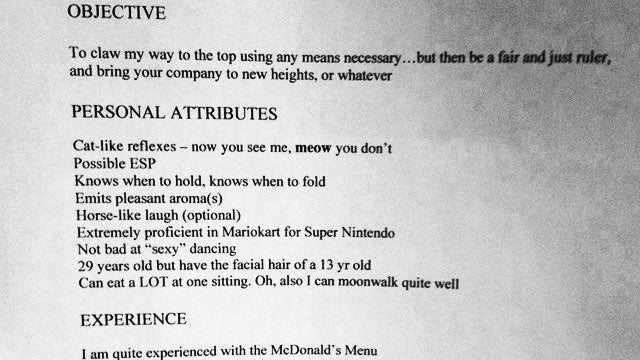


Honestly, I’ve probably read about a million of these things and for the most part they all suck.  The objective of your resume is to get you a job (or the job).  Period.  End of story.  The objective really isn’t to get you a rewarding and challenging position that blah blah blah blah blah…..it’s to get you the job.

True story, I’ve received SEVERAL resumes where the objective has resulted in an instant reject.  I mean, instant.  Sending a recruiter that says “To find a role at WRONG COMPANY” will get you rejected immediately.  Last one I saw was looking for a role at Amazon….that’s great, I love Amazon but um, I don’t work there.  Trash.

Alright...so I’m not a big fan of just complaining so in lieu of an Objective what should you do?  Here are a few options.

1) Don’t stress it.  Start your resume with your best attribute (Education or Experience) so when a recruiter or manager sees your resume it JUMPS to their attention.  This is always my preference on a resume.

2) Start with a summary of skills or experiences.  I don’t love this to be honest but if you’ve got a bunch of skills/experiences that an employer will really value than sum them up, show them off and then dig into the details later in your resume.

Make sense?  I hope so, my big issue with resumes right now is that they are filled with junk and don’t truly show off what makes a person exceptional….so over the next few posts we’ll blow it up.  I leave on vacation this week but will be posting from parts unknown….until then, enjoy the week

Tuesday, March 4, 2014

Five signs your career is undergoing the zombie apocalypse…


I had a fantastic conversation with my boss this week joking about how shows like “The Walking Dead” are kind of a funny analogy for work.  Well, we were laughing but it’s probably not that funny if you are in a dystopic professional state...but hey, no one said this blog is for SERIOUS advice.

Anyway, it got me thinking about how when you sense the zombie virus is invading your career….it’s time to run.  So, to help you out...a few signs your career may be going zombie:

You wander around aimlessly - It’s probably time to find a new job is you find yourself wondering around from task to task and not really engaging your brain.  What are you doing?  What are you looking for?  Work is a chance for you to use your brain and exercise your smarts.  You’re probably in a culture or company that doesn’t value thought if you find yourself aimlessly staggering through your day.

the-walking-dead-philosophy-zombies-and-zombi-L-y8ETSK.jpeg

You eat brains - This one is important.  You are no longer to accept good ideas or engage in real conversations...basically, you eat brains.  You laugh, but it’s true.  We’ve all meet with someone who just says no to everything, never adds what we should do...and just destroys the conversation.  Zombie Brain Eating Coworkers...get a new job.

You take weapons everywhere - Well, not literally but you get the point.  If you find yourself always getting ready for battle or an ambush at work...not good, beware.  You really want to work in a place where you can debate issues on their merit and have a robust conversation...not have to bring your weapons to keep you safe from the brain eaters.

You’re constantly overwhelmed - Ok, so did you see World War Z?  The scene where the zombies totally overwhelm Israel freaks me out….crazy.  Anyway, a lot of companies with bad cultures have this kind of crazy non-sensical hoard mentality where one person gets infected with an idea….and boom, everyone goes nuts for it.  Bad corporate cultures are like cults or zombie infections…..bad ideas dominate and overwhelm anyone who gets in the way.

You’re friends keep disappearing - This one is kind of obvious.  In all of these shows/movies people die.  Friends just kind of go away or get left behind.  It’s time for a job change when all of your friends are quitting or leaving.  Attrition is the dirty secret companies don’t like to talk about...some attrition is healthy and good for the organization but bad companies have unhealthy attrition rates because people realize it’s not a great company.  If you notice friends disappearing….start looking around.

zombie-attack-engagement-shoot.jpeg
Ok, that’s it this week.  Obviously just a funny blog but the point is really serious.  Bad companies or bad cultures are just not cool and rather that fight the zombies...run and find a place you can settle down a bit and really grow your career.

Final note, if people at your company ever dance like the zombies in the Thriller video…..you should stay there because that dance is just amazing.


Thursday, February 13, 2014

Guest Blog!! Common Sense Rules for Recruiters!!

I'm excited to have a guest blogger this week!  My dear friend Nell, she pretty much rules and is a ton of fun.  Like I said last week, I'm hoping to have more guest posts and this is the first.  With that, I'll let Nell tell you about a few basic rules for recruiters....needless to say, I love the last two.  Enjoy!


Common Sense Rules for Recruiters

One of the advantages to being a “senior” member of a recruiting team is that I have a lot of years (i.e. I’ve been doing this for a LONG time) from which to glean my knowledge and experience. I also recognize that the means with which we can now do our job has changed drastically and will continue to evolve as technology improves (sidenote: I remember when a former boss finally agreed to fore go the Rolodex for a desktop computer for each of us and watching her point her mouse at the screen like a garage door opener) but common sense and basics of how we do our job and conduct ourselves as recruiters should not.  

Far too often I hear stories from candidates and hiring managers about recruiters who more closely resemble used car salesmen or glorified paper pushers than professional recruiters and it absolutely makes my skin crawl.  Here are just a few of the common sense/basic rules that we should all be following:


  • You are often the first impression a candidate has of the company. Just like you are passing judgment on their skill set and experience, a candidate is assessing if the way you treat them is indicative of how employees are treated within your organization.  So regardless of their qualifications, always be respectful. Always.

  • When you are interviewing (phone or in-person) pay attention to THEM.  Don’t multi-task just because they can’t see you, and don’t check your email or take a call while they are sitting in front of you.  Ever.

  • If a co-worker or hiring manager isn't returning an email or if you are going back and forth over email and not getting anything resolved, pick up the damn phone and call them OR walk to their office and actually talk to them.  It’s amazing how well TALKING to someone actually works.  Technology is awesome but not always the best means to communicate.

  • Follow through with your candidates and hiring managers. If you say you are going to do X, then do it. Duh.

  • Pay it forward. Every week you should do something or help someone else find a job or make the one they’re in better.  When I was unemployed several years ago I was shocked at the number of people who went out of their way to help me. I was equally as shocked by the number of fellow recruiters who didn't return my calls or emails. 

and last but not least…

  • If you don’t enjoy recruiting or being a recruiter, then get a new job -- you’re making those of us who love it, look bad.

Find me at google.com/+NellThayerHeisner11 or on Twitter @nellthayer

Thursday, September 19, 2013

It's not just a recruiting problem...

I’ve been totally slacking with the blog lately, my bad.  Big topic this week, and it’s one I’ve been wanting to write for a while.  

You hear a lot about companies or hiring managers who complain about their recruiting team and how they can’t find the right people.  Well...maybe, I mean sure..some recruiting departments suck but a lot of the time it’s a company wide issue but its much easier to just blame the recruiters.  Why take accountability when you can just thrash the recruiting folks?  It's easy, that's why. However, the truth is recruiting is a company wide project, everyone needs to be all in or you all fail.  It’s that simple.  Here are my quick thoughts on what each person in the company needs to do in order to successfully recruit...leaving out the recruiters of course because um you guys just do your job.

Hiring Managers -  So, these guys are key.  If you’re a hiring manager you've got a huge job to do here.  You need to respond quickly to resumes and be decisive.  If you meet someone great..hire them..don’t play games, hire the person.  Another key way to contribute as a hiring manager is to help sell candidates and close candidates on joining the team.  The last one, and this is important...hiring managers need to be engaged.  They need to listen when the recruiters push back on the process or decision making process.  Recruiters and managers are partners in hiring.

The rest of HR - The rest of HR play a huge role in recruiting.  The biggest, and frankly the hardest is attrition.  HR absolutely needs to focus on making sure people are leaving out back door as fast (or faster) than the recruiting team can hire them.  A lot of HR teams don’t like to hear that but it’s true.  If you have high attrition, you could have greatest recruiting team on earth and you’re still screwed.  HR also can focus on compensation, benefits and all the cultural stuff to make a company attractive.  Like I said above, it’s a team effort and HR/Recruiting are the essence of team so make sure you’re truly supporting each other.

Interviewers - Ahhhh, the interviewers.  Honestly, probably the most unappreciated piece of the recruiting puzzle.  Hiring Managers, HR and Recruiters can all do their job but if the interviewers are late, disrespectful, uncalibrated or just plan bad…….everyone fails again.  As an interviewer you've got pretty clear responsibilities.  Be prepared, be positive and make sure you give the candidate a great experience.  When you’re done, give prompt and decisive feedback to the recruiters so they can hire great people.

Executives - For senior leadership it’s pretty easy.  Stay engaged.  Don’t float above the fray and assume hiring will be easy.  Get into the process, talk to candidates, review resumes and generally do the things you’d have done before you became an Exec.  A lot of exec are “too busy” to interview or give timely feedback….I call BS.  If hiring and recruiting is a priority...get it done or delegate the authority to someone who can and will meet the companies hiring objectives.

The moral of the story here is simple.  Recruiting and hiring is a company wide project.  It’s not just the recruiters who are responsible for hiring...sure, we carry the heavy load but if the rest of the company can’t convert the pipeline to hires….you lose.  It’s that simple.

Wednesday, July 10, 2013

What's the difference between a good recruiter and a great recruiter.....

I've been thinking a lot about what really makes a great recruiter.  A lot of my friends and colleagues are looking to add folks to their teams and they all want great talent, not just good talent.  (Frankly, I'm trying to do the same thing on my team but that's not the topic of this blog)


So, what really makes someone great?  I mean.....do we even know?  I don't think anyone has the magic bullet for finding a great recruiter but here are a few of my thoughts between good and great recruiters.

1)  Good recruiters fill jobs, great recruiters build the organization - This one is crystal clear to me.  Most recruiters fill jobs and move one.  Weak.  Great recruiters partner with the business to help build the best organization the possibly can.  Now, this is hard.  You can't always be your managers friend.  You've got to push back on things and speak your mind when you disagree with a decision.  Which leads to #2.....

2) Good recruiters work on their headcount, great recruiters drive headcount and are vocal about hiring decisions - Honestly, any knucklehead can fill a job....seriously, what we do is not rocket science.  But a great recruiter finds talent that forces the business to hire opportunistically and get creative.  Great recruiters find so many great people that they business has to think outside of the box in order to get as much talent as they possibly can.

3)  Good recruiters leverage programs, great recruiters build programs - Again, not rocket science here but lots of really good recruiters who can leverage all kinds of recruiting programs to build candidate pipeline...now the great recruiters dream up new programs and build them to fill a business need. 

4) Good recruiters sell the job, great recruiters over-communicate the opportunity - This sounds like a subtle one but trust me the different for your organization is crazy.  Good recruiters know their roles and can sell candidates on the job.  Big deal.  Great recruiters over-communicate with the candidate and can explain the opportunity (not just the job).  Truly great talent doesn't take a job...they look for exceptional opportunities to grow.

5)  Good recruiters have all kinds of tricks....great recruiters share their tricks and make everyone better - This is probably the most important.  Plenty of recruiters have little tips and tricks they use to get the job done but the great ones are share and collaborate with team to make everyone better...thus creating a great team.

Clearly this is an incomplete list but it's a start.  I'll do a follow up post on a few more things (general smarts, creativity, etc etc) that make a great recruiter.  But for anyone out there trying to hire a team or build a recruiting function you can't rely on "good" folks to take you to the next level.....you've absolutely have to find great recruiters who are smart, can get things done and move the needle for the organization.

Good luck out there this week and more soon before I go on vacation!

Saturday, February 23, 2013

My Campus Playbook - What to do if you miss the career fair


As the spring college recruiting season starts to kick into high gear, it got me thinking a bit about two things.  First, are these fairs worth it for students?  And secondly, what do you do if you’re a student who can’t make it....well, here we go.

Are career fairs worth it?  Without a doubt these fairs are worth it if you are a student looking for a job.  Tons of companies and recruiters descend on campus to hire as many students as the can....it’s really a no brainer for you to attend.  If nothing else, it’s great interview practice to talk to so many companies over the course of a few hours.

What do you do if you can’t make it?  Now this is a bit more complicated b/c a lot of companies view career fairs as their primary recruiting vehicle on campus.  So...you’ve got to have a plan.  Here is what I’d do....

1) Ask your friends for connections - Chances are you’ve got a friend who attended the fair and met a ton of folks.  Ask them if they don’t mind either sharing names of people they met...or even pass out your resume to a few places for you.  Most companies are hiring for multiple roles so no fear of competition here so your friends should be a great asset.

2)  Ask your professors - Professors are great connections for you.  They have former students that work at great companies and in many cases may have worked in industry before becoming a professor.  They’ll likely be able to connect you with a few alumni too.

3) Go to Career Services or the Alumni Office - Schools have these offices for a reason...so use them.  Now, don’t show up expecting a job...go there with a plan.  Ask for company contacts or lists of alumni that have registered themselves with the school.  Basically, these offices should be able to provide you with enough leads to jumpstart your career.

4)  Start Networking via LinkedIn - The sooner you start your LinkedIn profile the better but get that going and start reaching out to folks who might help.  Research companies, groups, alumni associations, anything really that might help you find a cool gig.  There is no such thing as too aggressive when using LinkedIn for a job search

5) Ask your parents - Huh? What?  I bet you didn’t expect this one but it’s true.  You really have no clue who your parents know...sure you know a few of their friends but your parents likely have a big network of folks they can tap for you.....the trick is asking and making sure they realize you need help.  So, suck it up and ask mom/dad for some advice you might be surprised at what comes back.

Hope this helps, missing a college career fair should be fatal to your search...you just have to work a little harder.

Good luck out there, let me know if I can help!

Friday, February 15, 2013

Required vs Preferred - Getting beyond the job description

I’m a little late this week but really excited to write this post as it’s a request from an old friend but also a REALLY great topic that I think people really struggle with during a job search.

The topic is how do you navigate around having all of the “required” skills an employer looks for versus stressing the skills you do have that are “preferred”.  Figuring out how to do this is the difference between getting a job...and not.  With that, here are a few ways to show off your skills to a potential employer and navigating your way through what they require or prefer.

1)  Customize your resume for the job - Right?  Honestly, why send the same resume to a hundred jobs and see what sticks.  Bad idea jeans (anyone get that reference?).  If you see a job and it looks really cool, write a customized resume that speaks to the description and greatly increases the odds you’ll get an interview.

2) Get the interview, no matter what - Here’s the deal.  Employers get hundreds (even thoughts) of resumes for most roles.  Thinking you’ll apply and magically get an interview? Probably won’t happen.  So, what you need to do is get the interview at all costs.   Find a referral?  Meet someone at a career fair?  Use LinkedIn for a connection?  Do an informational interview?  Whatever, you need to talk to someone, anyone who can help.  Getting yourself to be more than a piece of paper will allow you to get the interview and then answer questions....in person.  FTW!

3)  Focus on your skills - Ok, so you've customized your resume and have the interview.  Perfect. Now, when you get asked a question where the answer immediately seems like “no”... you've got to find a way to focus on what you've done and how it relates to the job.  Let me show you and example:

Question - “Jeff, give me an example of when you built a car and how it worked.”
Answer 1 - “Um.....I can’t even change my oil”

Not good....here’s a better try

Answer 2 - “Well, although I've never built a car.  Last summer I did fix my lawn mower engine.  We had an issue with the fuel line and my neighbor and I took it apart and fixed the line.  I think with this experience I’ll be able to pretty quickly come up to speed on fixing cars”

Better right?  Clearly, the goal here is simple. Rather than just seize up and give a one word answer.  You want to take a deep breath and give an answer that shows you've got the core skills that the company is looking for even if you don’t have everything that’s “preferred” or “required” on the job description.

Happy hunting out there this week, ping me if you need any advice and I’ll get back ASAP

Monday, January 14, 2013

Welcome to 2013...use your ATS system!

It’s been a while since I’ve written a blog specifically targeted to recruiters but this one has been lingering on me for a bit.  It’s about the importance of your applicant tracking system (ATS).  Most recruiters I know HATE using an ATS and resist it as much as they can....here’s a news flash, if you are really a great recruiter you are using your ATS, using it well and driving your business from the data in your system.

Let me explain

1) Data rules - It’s 2013 people, data driven recruiting is the way of future.  Your ATS is the way you can capture and report your activity...without needing to make manual reports.  You need data to understand what works and what does not work with your strategy.  If you aren’t tracking this, you’re shooting from the him....aka guessing.  Don’t guess, track your work and analyze the data.

2) Setting expectations - Ever feel like recruiting is always being shot at by the business?  No one in the organization “gets it”?  Well, data will help you show them the way and set expectations properly.  For example, does a manager need 15 onsites to make an offer?  Well, news flash....that’s a problem and the only way to explain the situation is if you can present the data and recommend a solution.

3) Your lawyer will thank you - Um, how do I say this nicely?  If you ever get audited or sued and you aren’t using your ATS.......you’re screwed.  Imagine having to justify hiring or NOT hiring someone to a judge (and jury!) with a bunch of emails and random crap from your inbox or spreadsheets.....nightmare.  Whereas, if you are using your ATS and can pull every applicant for a role with their disposition you’ll be in a much happier place.

So there you go recruiting friends.....I’m sure a bunch of you hate using an ATS....but trust me you should. And those of you saying “my system sucks”....well, make it better spend the time and even the money to make work for you and the show the business what you do.

More soon.....keep it real out this this week!

Wednesday, July 11, 2012

It's not you, it's the team

Ok, I’m back from vacation and rested......nothing too crazy this week but a quick thought on how collaboration impacts recruiting.

Here we go.  Collaboration is THE key to successful staffing programs.  A lot of recruiters talk about what “they” do and how great “they” are...the fact is...yes some recruiters are better than others but without strong collaboration and support from the team they wouldn’t be nearly as successful.

You see, anytime you are recruiting someone it’s the ultimate collaboration.  You need recruiting, the team and anyone in the office who interacts with the candidate pulling in the same direction.  The person at the front desk needs to be friendly and inviting, your recruiter as to be on their game, the team needs to not only assess the candidate but make sure they are selling the opportunity and finally, the onboarding process needs to be smooth, efficient and make the new employee excited to join.

So, if you really, truly want to hire the BEST talent.....get everyone on the same page and remember that recruiting is the ultimate team sport.